Onawave EndoSolve - Endometriosis Therapy Device
Endometriosis affects millions of women worldwide and is often associated with chronic pelvic pain that can significantly impact daily life. EndoSolve was developed as a wearable medical device designed to provide targeted electrical stimulation therapy in a discreet, user-friendly format.
We played a central role in the development of the device, leading the enclosure design, flex PCB integration, internal PCB architecture, embedded firmware, and companion mobile application. The goal was to transform an early-stage concept into a refined, clinically trial-ready medical device that balanced performance, comfort, and usability.
The Challenge
The device needed to deliver controlled electrical stimulation in a form that was compact, intuitive, and comfortable for extended wear. Early concepts relied on a stacked two-PCB architecture, increasing size, assembly complexity, and manufacturing cost. In addition, electrodes were initially connected via a cable, which made placement less intuitive and reduced overall usability.
The product also required interchangeable therapy patches that were durable, hygienic, and comfortable against the skin. Achieving reliable electrical connection, precise alignment, and user-friendly attachment without adding bulk or complexity presented a significant design challenge.
Our Approach
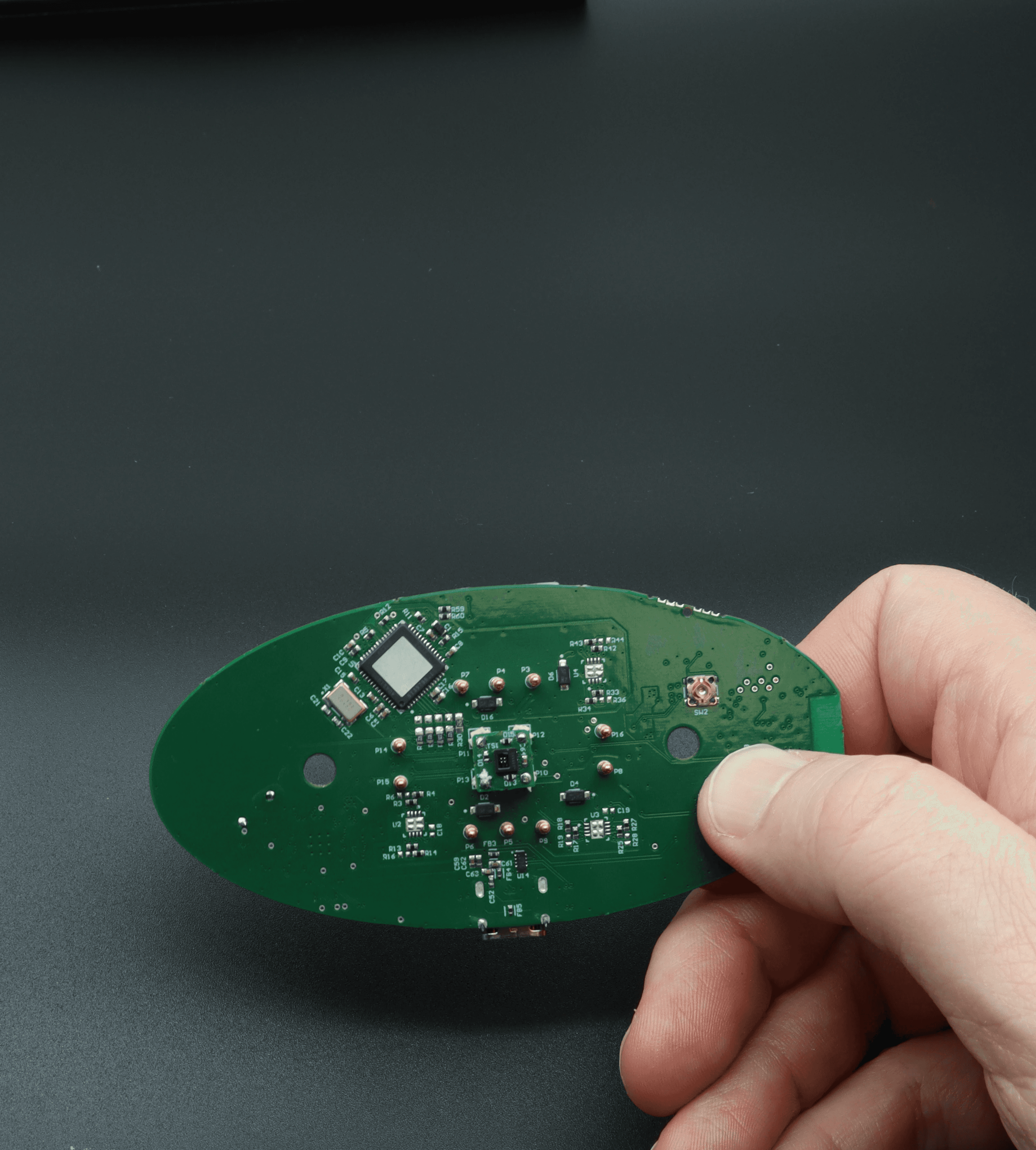
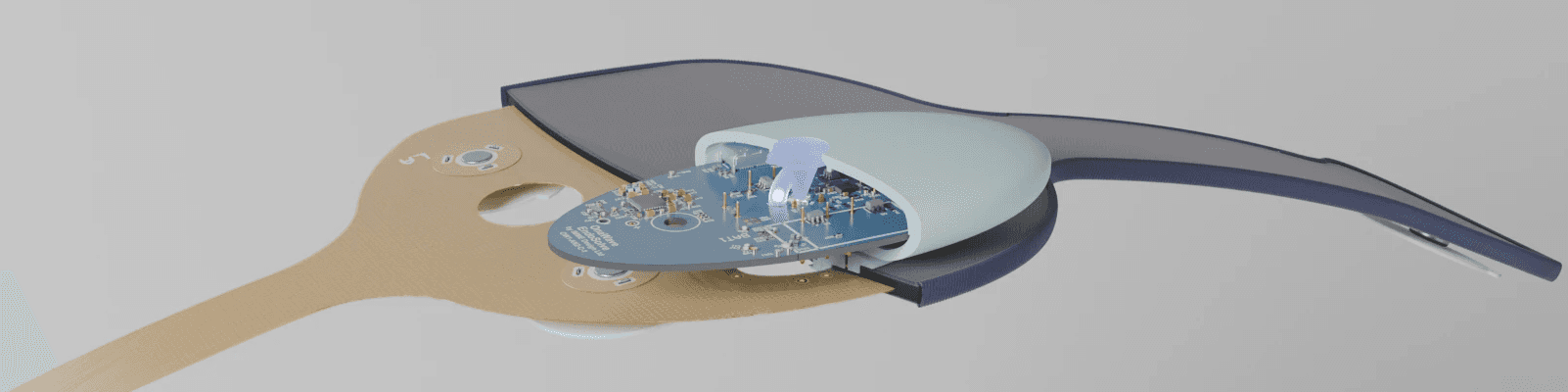
We began by redesigning the internal electronics architecture. Through careful component selection and optimised layout, we reduced the original stacked two-PCB concept to a single PCB design. This significantly reduced the overall size of the device while lowering manufacturing cost and simplifying assembly.
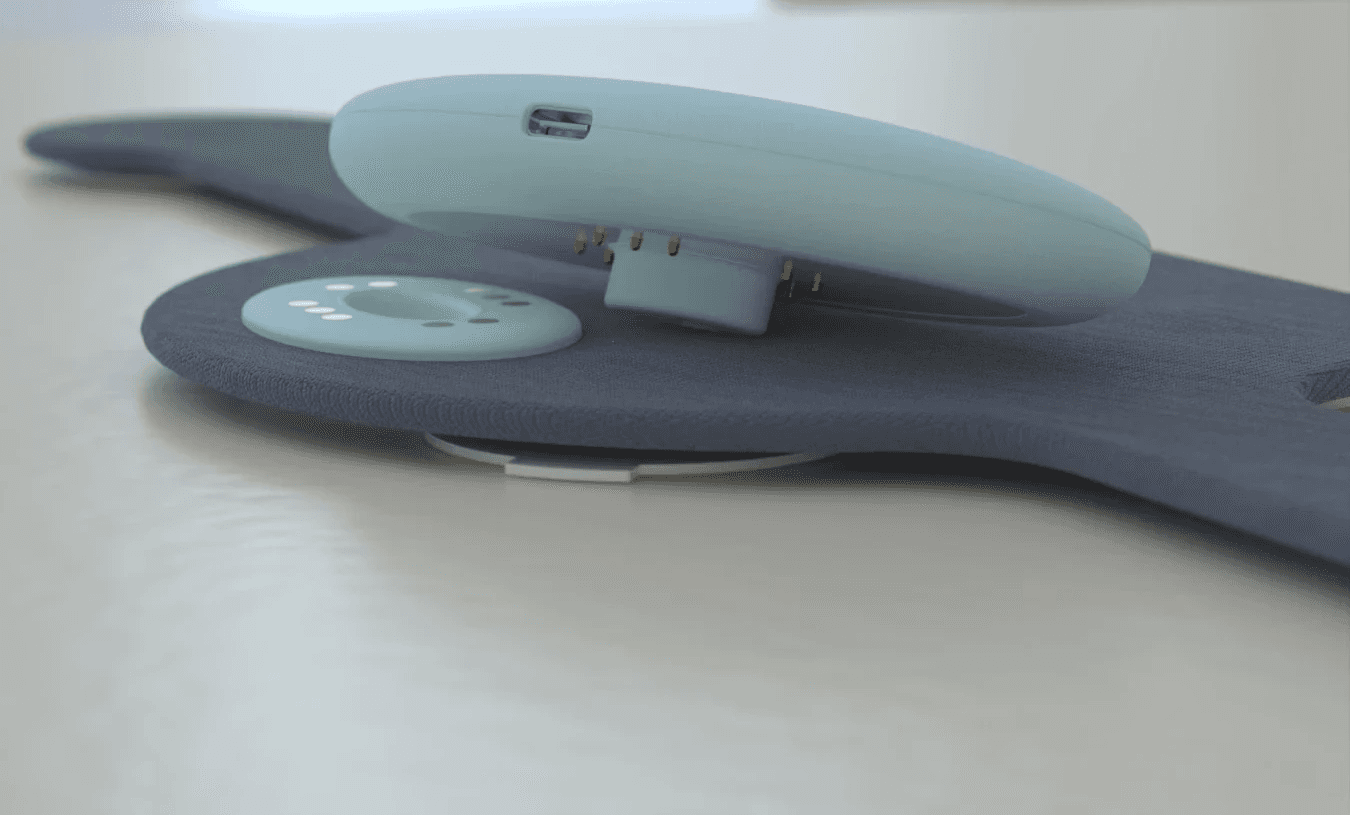
We designed the flex PCB that integrates with the enclosure and supports the stimulation interface. The enclosure itself was engineered to house the electronics efficiently while maintaining a discreet and ergonomic form factor suitable for daily wear.
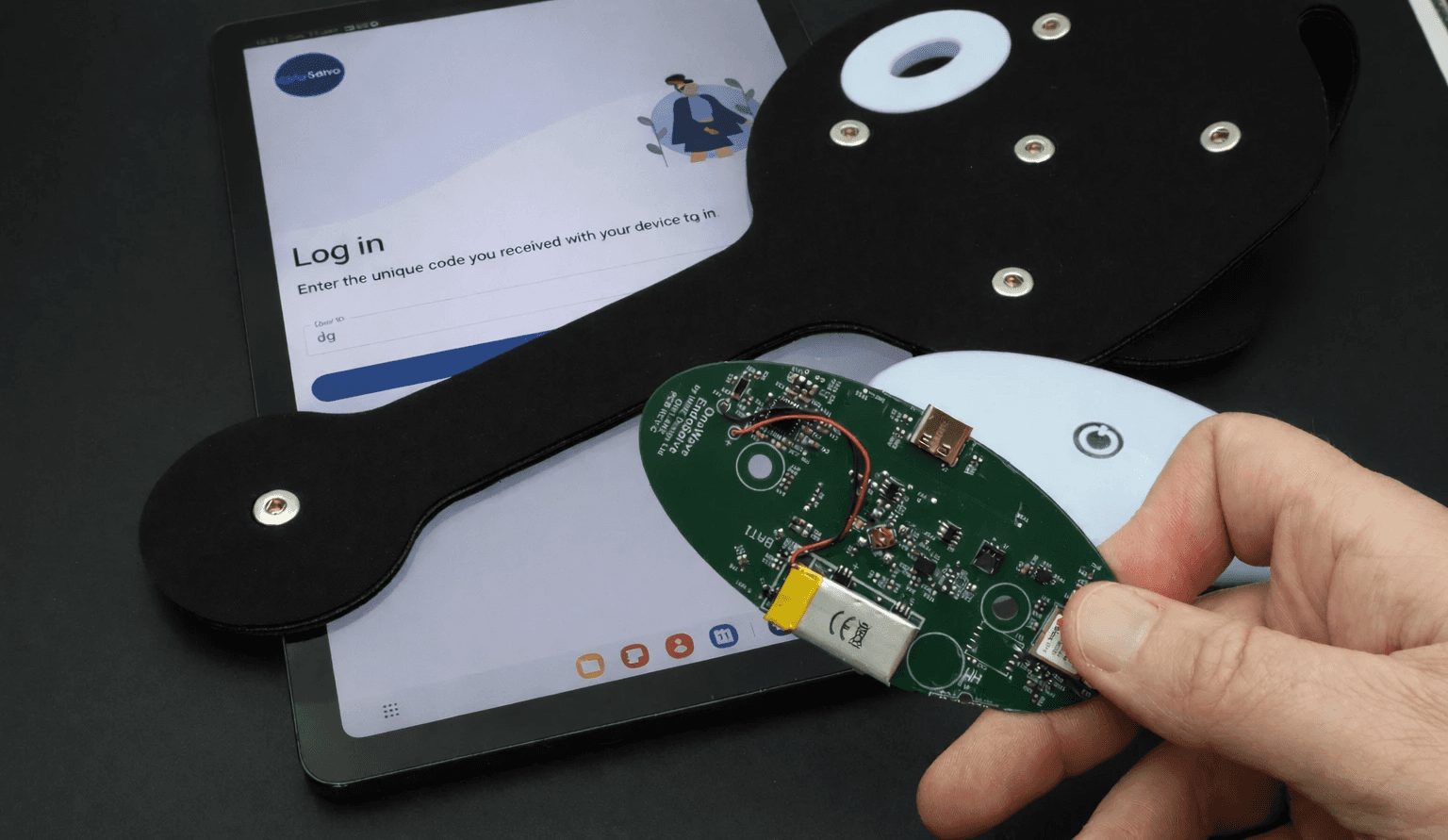
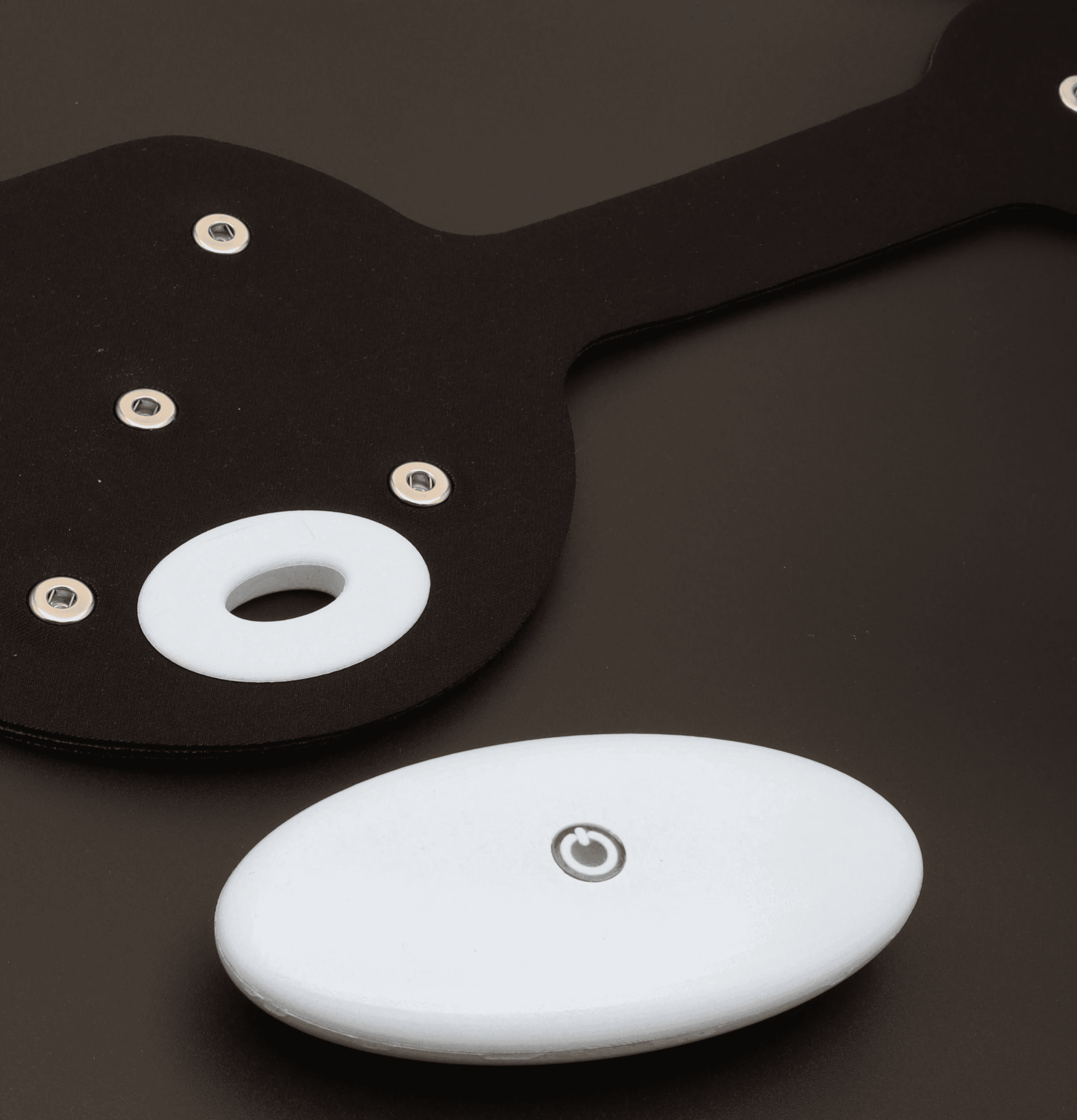
To improve usability, we replaced the original cabled electrode system with a patch-based solution. We developed a multi-slot patch design that simplified electrode placement and reduced setup complexity for the user. The patch material required careful consideration. It needed to be durable, cleanable, and comfortable for repeated use. We selected a nylon-lined spacer mesh, which provided structural integrity while improving comfort against the skin.
Because the patches needed to be interchangeable, we designed a magnetic alignment system that allows the device to automatically align and connect to the patch securely. This removed guesswork from placement and improved the overall user experience.
Alongside the hardware development, we designed the embedded firmware responsible for delivering controlled stimulation profiles and managing system safety. We also developed the companion mobile application, enabling users to manage therapy sessions through a clear and intuitive interface.
Custom single-board PCB architecture
Flex PCB integration within wearable enclosure
Embedded firmware for controlled electrical stimulation
Magnetic alignment and electrical connection system
Nylon-lined spacer mesh patch material
Companion mobile application for therapy control
Outcome
The final device is significantly more compact and manufacturable than the original concept, with reduced assembly complexity and improved usability. The transition to a single PCB architecture and integrated patch system streamlined both production and user interaction.
EndoSolve is now progressing through clinical trials, demonstrating how thoughtful system-level redesign across electronics, mechanical integration, and software can meaningfully improve both manufacturability and patient experience in a medical device platform.

When we began developing EndoSolve — our platform focused on improving the diagnosis of endometriosis and other pelvic conditions — we needed a partner who could help us move quickly from concept to working prototype. IMME Design supported us from early proof of concept through to full product development, including electronics, firmware, mechanical design, app development, and the prototypes used in our field studies. Their ability to deliver across these disciplines as a single, integrated team made a significant difference. Endometriosis can take many years to diagnose, and our goal is to meaningfully shorten that timeline. Working with IMME has helped us accelerate progress toward that mission.
John Hegarty
COO, OnaWave Medical